



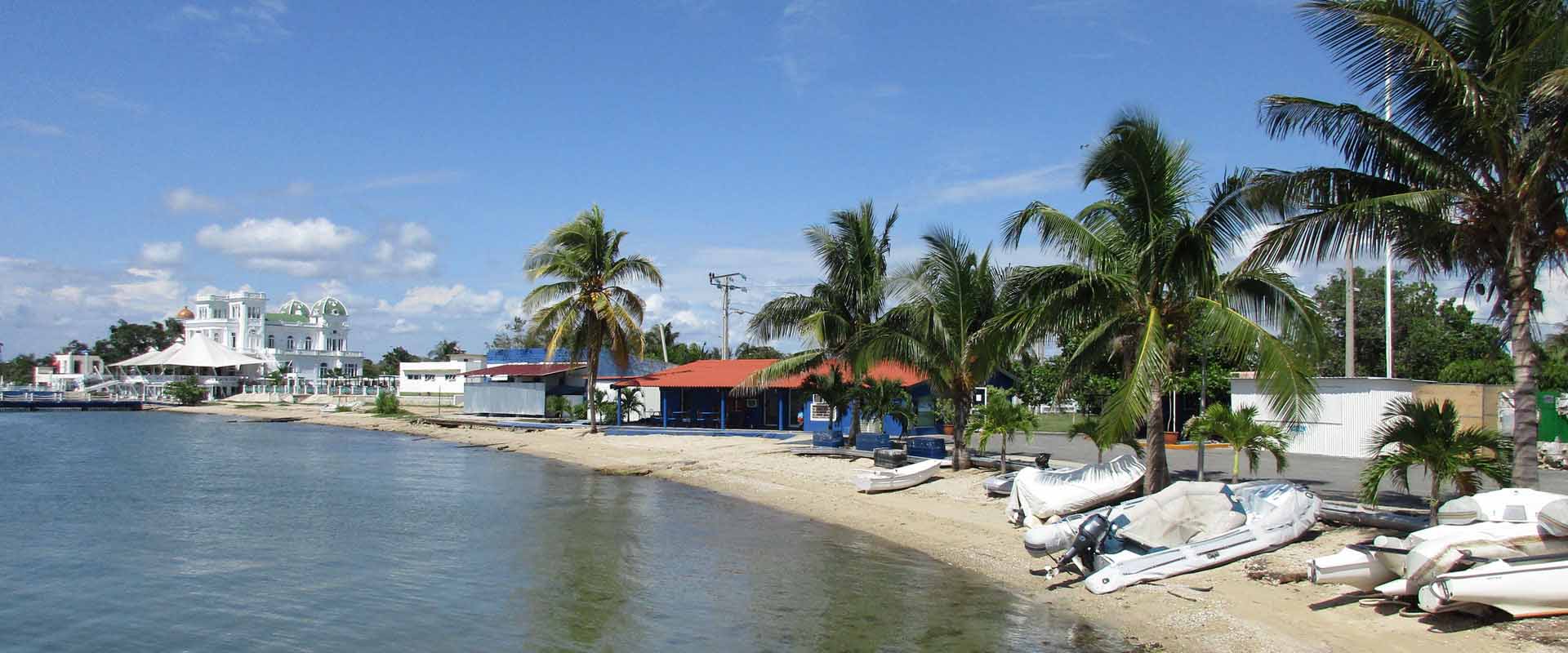
Anyone familiar with the Caribbean from Martinique, Guadeloupe, or St. Martin will find southern Cuba to be a completely different world.
Here, sailing begins where the tourist infrastructure ends—in a largely unspoiled archipelago. Off the southern coast of Cuba, the Canarreos Archipelago stretches out, offering a fascinating landscape of hundreds of small islands and cays. White sand beaches, turquoise waters, mangroves, and extensive coral reefs characterize this extraordinary sailing destination.
While the coastline off Martinique or St. Martin is dominated by numerous marinas, restaurants, and charter yachts, here you’ll often go for hours without encountering another yacht. Instead of crowded anchorages, you’ll find secluded beaches where the only sounds are the murmur of the sea and the wind. Cayo Largo, Cayo Rosario, Cayo Guana del Este, and the many smaller islands offer a constant stream of new destinations for a personalized sailing trip.
Many of these islands seem to be from another era—unspoiled, peaceful, and largely free of mass tourism.
For experienced sailors in particular, this seclusion is what makes Cuba so special. You don’t sail from one tourist hotspot to the next, but rather discover an archipelago that moves to its own rhythm.
The area’s unique character is also evident underwater: coral reefs and a biodiverse tropical underwater world invite you to snorkel and dive.
At many anchorages, you can jump straight from the catamaran into the crystal-clear water and explore the underwater world.
Add to that kilometers of sandy beaches, secluded coves, and natural lagoons that you often have all to yourself.
And Cuba itself is more than just a sailing destination: music, classic cars, colonial cities, cigars, rum, and the extraordinary zest for life of the Cuban people are all part of the journey. Those who visit Havana, Cienfuegos, or Trinidad after sailing will experience a fascinating contrast between Caribbean nature and Cuban culture.
Martinique, Guadeloupe, and St. Martin undoubtedly offer superb sailing destinations and excellent infrastructure. Cuba, on the other hand, offers something that is becoming increasingly rare in the Caribbean: space, tranquility, and the feeling of truly discovering something new. Here, a day of sailing can still end with you anchoring off a secluded island and enjoying the sunset without the backdrop of hotels or crowds of people.
That’s why southern Cuba isn’t just another destination in the Caribbean—it’s a sailing experience for anyone seeking the authentic Caribbean. With Platten Sailing Cuba, you’ll discover an archipelago where sailing once again means adventure, freedom, and the true joy of discovery.
Cuba exceeds all a sailor’s dreams—a mild, warm climate year-round, steady winds, unique natural beauty, and open-minded, hospitable people all contribute to this, as does the reliable nautical infrastructure, which is being specifically promoted and expanded by the Cuban government.
For sailors, the entire coastline and the offshore islands are freely accessible, with the exception of a restricted area near the infamous “Bay of Pigs” or Playa Girón. You must not leave Cuban territorial waters (12 nautical miles from the baseline), and you may not take on board any persons who are not listed on the officially approved crew list.
About twenty marinas and nautical centers throughout Cuba welcome yachts flying any flag and offer every conceivable service.
Currently, there are two companies in Cuba where you can rent sailing yachts: Platten Sailing – Yacht Charter Cuba and Alboran, a provider from Spain.
Platten Sailing - Yacht Charter Cuba specializes in Cuba. Alboran also offers sailing yachts in Spain. Dream Yacht Charter has not been operating in Cuba since April 2024.
The only sailing area is off the southern coast of Cuba. It stretches from Isla de Juventud to Santiago de Cuba and also includes the Los Canarreos Archipelago and the Jardines de la Reina.
The Los Canarreos Archipelago is one of the most fascinating and picturesque island groups in the Caribbean. It stretches along Cuba’s southern coast and comprises over 350 islands and cays. Here are some of the unique features that set the Los Canarreos Archipelago apart:
Pristine beaches: The archipelago is known for its pristine, white-sand beaches surrounded by clear, turquoise waters. Many of the islands are uninhabited and offer secluded, peaceful beaches that are often deserted.
Nature reserves: Large parts of the archipelago are designated as nature reserves, which keeps the natural environment largely intact. The flora and fauna are rich and diverse, featuring numerous bird species, iguanas, and marine life.
Dazzling shades of blue: The water in the Los Canarreos Archipelago is crystal-clear and shimmers in various shades of blue and green. These colors, combined with the white sand, create breathtaking contrasts and are a highlight for photographers and nature lovers.
World-Class Snorkeling and Diving: The coral reefs surrounding the islands offer some of the best snorkeling and diving spots in the Caribbean. The reefs are teeming with marine life, including colorful fish, corals, starfish, and, occasionally, sea turtles.
Beautiful beaches: Cayo Largo del Sur is one of the archipelago’s main islands and is famous for its long, white-sand beaches, such as Playa Paraiso and Playa Sirena, which are regularly voted among the most beautiful beaches in the world. Relaxation and tranquility: Since the island has few tourist facilities and is free from urban noise, it offers a high degree of peace and relaxation, ideal for those seeking rest and recuperation.
A Diverse Archipelago: The archipelago encompasses a wide range of islands—from small, uninhabited cays to larger islands like Isla de la Juventud. Each island has its own unique character, ranging from lush mangrove and palm forests to arid landscapes dotted with cacti.
Cayo Rico and Cayo Iguana: These smaller islands are particularly known for their wildlife—especially the iguanas that live there—and their peaceful beaches.
Remoteness: The relative isolation and limited development of many islands in the archipelago make them a paradise for nature lovers and sailors. Free from the hustle and bustle and mass tourism of other Caribbean destinations, the Los Canarreos Archipelago remains largely untouched.
Sustainable Tourism: The limited infrastructure promotes sustainable tourism and helps preserve the islands’ natural beauty.
Pirate Legends: Historically, the Los Canarreos Archipelago was a haven for pirates. Stories and legends of buried treasure add to the region’s mystical allure.
Cultural Influences: Its proximity to Isla de la Juventud, which has a fascinating cultural and political history, adds an interesting cultural dimension to the archipelago.
The Los Canarreos Archipelago captivates visitors with its breathtaking natural beauty, pristine beaches, crystal-clear waters, and diverse wildlife. It is a place where visitors can experience true seclusion and nature in its purest form—a true hidden gem for adventurers, nature lovers, and those seeking relaxation.
The Jardines de la Reina (Queen’s Gardens) are a sprawling archipelago off the southern coast of Cuba and rank among the most impressive and beautiful natural paradises in the Caribbean. They offer a unique combination of unspoiled nature, rich marine life, and breathtaking underwater scenery. Here are some of the special attractions of the Jardines de la Reina:
Strictly Protected Area: The Jardines de la Reina is a strictly protected marine reserve that has been fully designated as a nature reserve since 1996. As a result, the ecosystem has remained exceptionally intact. Access is limited, which helps preserve nature and keep the area untouched.
Biodiversity: The archipelago is a biodiversity hotspot, both above and below the water. The pristine nature of the mangrove forests, seagrass beds, and coral reefs is characterized by an extraordinary variety of animal and plant species.
Lush Coral Reefs: The Jardines de la Reina are famous for their spectacular coral reefs, which are among the best-preserved in the Caribbean. The diversity and vibrant colors of the corals are breathtaking and provide a habitat for numerous species of fish and other marine life.
Large Marine Life: The reefs are known for encounters with large marine creatures such as sharks, rays, sea turtles, and barracudas. Particularly impressive are the numerous Caribbean reef sharks and silky sharks, which are frequently encountered here. Variety of Dive Sites: From shallow reefs to steep walls, the archipelago offers a wide variety of dive sites suitable for both beginners and experienced divers.
Less Touristy: Compared to other Caribbean destinations, the Jardines de la Reina are less crowded due to limited access and strict regulations. This exclusivity ensures that visitors can enjoy nature without crowds.
Robinson Crusoe experience: With their secluded beaches, mangrove islands, and remote anchorages, the Jardines de la Reina offer a true Robinson Crusoe experience, far removed from civilization.
Sharks and Crocodiles: One of the archipelago’s highlights is its high density of sharks, including the Caribbean reef shark and the silky shark. In addition, the Jardines de la Reina are one of the few places where divers have the opportunity to observe American crocodiles in their natural habitat.
Abundance of Fish Species: In addition to the large marine animals, there is also an incredible variety of smaller fish, including parrotfish, snappers, groupers, and many other species that make snorkeling and diving an unforgettable experience.
Diverse Ecosystems: The archipelago consists of a complex mix of mangrove islands, sandbars, and reefs that provide diverse habitats for numerous species. The mangrove forests play a vital role as breeding grounds for fish and other marine life.
Pristine Beaches: The islands’ beaches are pristine, with fine, white sand and surrounded by crystal-clear water. These beaches are ideal for relaxing days in complete seclusion.
World-Class Sport Fishing: Jardines de la Reina is also a paradise for sport fishermen. The region is known for fly fishing, particularly for tarpon, bonefish, and permit. The rich fish population offers excellent conditions for sustainable catch-and-release fishing.
The Jardines de la Reina are particularly beautiful thanks to their unspoiled and diverse natural environment, spectacular underwater world, seclusion, and rich wildlife. This archipelago is a dream destination for nature lovers, divers, and anglers who want to experience one of the Caribbean’s last unspoiled oases. Here, breathtaking natural beauty and exclusivity come together to create an unparalleled experience.